Agroecology

Understanding Agroecology

Agroecology is a growing movement including farmers and food producers who are using fair and sustainable regenerative practices. But it is more than a way of farming - it is a way of describing a healthy food system with huge potential to tackle climate change, regenerate landscapes and restore nature. Scroll down to find out more about FFCC research and evidence for how agroecology works and learn about the farmers, communities, businesses and organisations helping lead a transition to agroecology by 2030.

More about the definition of agroecology

Find out more below

There is a growing consensus that agroecology… is the optimal route for the majority of our land. That momentum and endorsement is evidenced by great reports from the Food, Farming and Countryside Commission
Helen Browning OBE, Soil Association and FFCC Commissioner

Latest evidence for agroecology

The momentum and evidence for a wholesale transition to agroecology across UK nations is growing. Organisations across sectors are recognising the potential of agroecology to deliver many benefits, for nature, climate, health and the economy.

What would an agroecological UK look like?

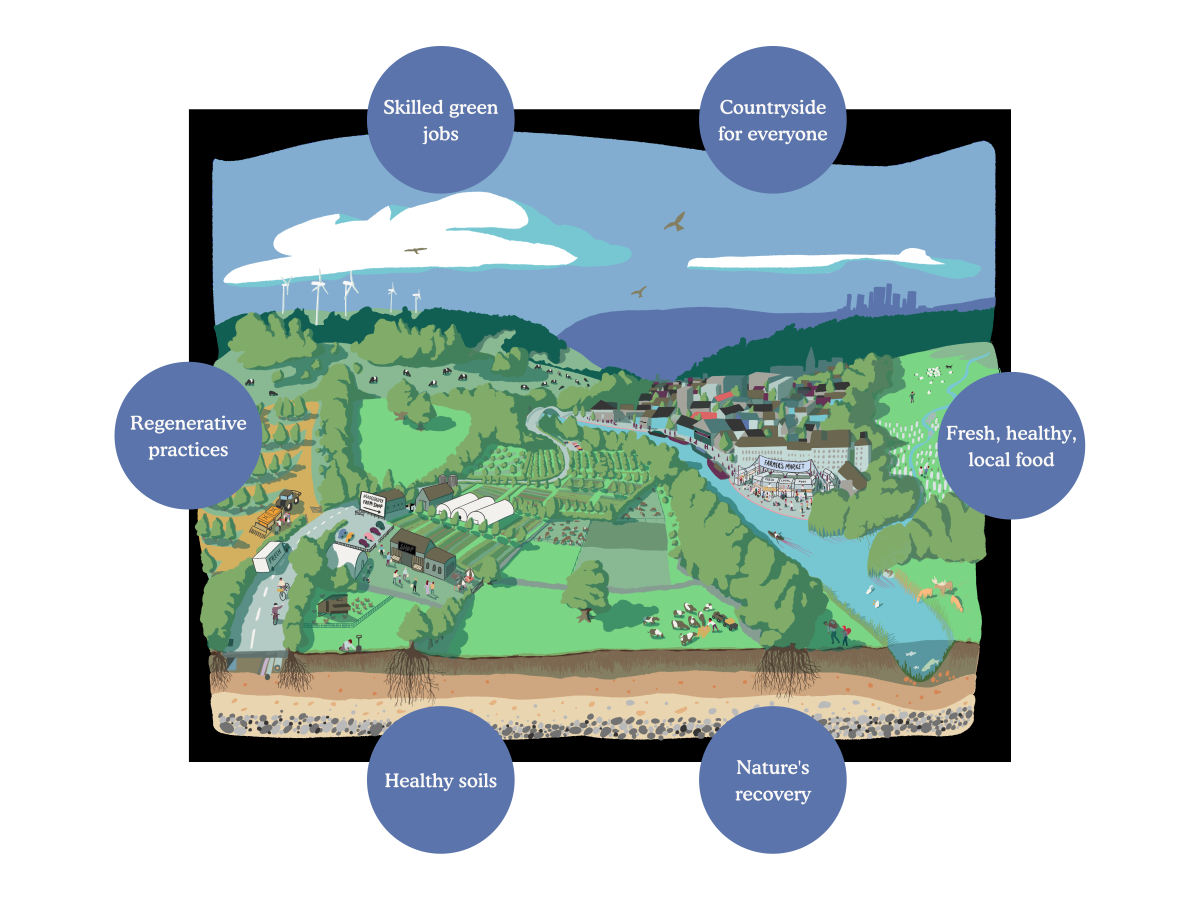
This illustration shows a version of the future in which agroecology is the primary operating principle. Fresh, nutritious, affordable food is readily available close to where people live, food businesses provide rewarding work for their local community and the ecosystem includes healthy rivers, healthy soil and access to nature for all.

Agroecology is a path to this future.

How would this transition happen in the UK?

The data underpinning FFCC's Farming for Change report charts a pathway from the UK's current food and farming system, to a system in which agroecology is the dominant operating principle.

As the transition to agroecology brings more diversity into the landscape, it frees up more space for nature, reduces emissions and supports a healthier, more varied diet.

Watch a data visualisation of the transition

What are the risks of the UK's current farming system?

Concern about food security is driving an intensification of farming in certain areas of the UK, whilst in other areas land is being set aside to meet the nation's nature and climate goals - a pattern known as sustainable intensification.

Evidence from Chatham House shows that this approach - intensifying farming to meet demand - risks in turn driving more demand, which in turn drives up the value of land, and makes it less likely that this land can be protected - a lose-lose for nature and climate.

The research concludes that government should regulate markets to protect and enhance the many different public benefits that land provides.

Read more about the Chatham House report

Agroecology is a pathway to transition for the whole food system, from field to fork.

Growing the evidence

FFCC has produced a series of reports which examine the case for an agroecological UK

Farming for Change: Charting a course that works for all

Published in November 2021, this report shows that a transition to agroecology:

  • Can reduce emissions by upwards of 70%.
  • Supports species abundance across and beyond the farmed environment.
  • Keeps food production at the core of land management, growing enough healthy and sustainable food for all.
  • Ensures we do not export production (or externalise environmental impacts) overseas.
  • Provides a broad pathway for resilient and sustainable farm businesses across the UK to take responsibility for food security.
Read more

Farming for Change: Mapping a route to 2030

In January 2021, FFCC published this report introducing new modelling which provides evidence that a transition to agroecology in UK countries would allow us to grow enough healthy food for a growing population, entirely remove pesticides and synthetic fertilisers, free-up agricultural land for nature and other uses, and reduce net greenhouse gas emissions by 80%.

Read more

Farming Smarter: The case for agroecological enterprise

This report focusses on explaining the business case for agroecology at a farm level and the policy-level vision required to allow farm businesses to transition to this model with confidence. It explores the economic argument for regenerative farming and confirms that there is no need for a trade-off between profit and nature.

Read more

Farming Smarter: Investing in our future

This report sets out the case for an Agroecology Development Bank which would serve a distinct and specialised role in agricultural and rural transformation. It provides a ‘win-win’ for UK governments by helping deliver against climate and nature ambitions and, at the same time, helping the agricultural sector to thrive.

Read more

The transition has already begun

Routes to Action shows that farmers, communities and businesses are already transitioning to agroecology and its regenerative practices across the country. FFCC's virtual tour of the UK helped to gather the knowledge and ideas from hundreds of people around six elements critical to this transition.

Read more

Agroecology in Scotland

Evidence points to the important role of agroecology in Scotland's farming practice, and the huge potential for sector-wide change to deliver Scottish policy on climate, nature, health, and rural support.

Find out more about FFCC's work in Scotland below.

Scotland Hub

Agroecology in action

Across the UK, citizens are creating a fair and sustainable future. Read compelling stories of agroecology in action, at scale and throughout the food chain, here in the UK.

Explore agroecology stories

Explore organisations working for a UK transition to fair and sustainable farming.

Join networks of agroecology and regenerative farming practitioners.

Learn more at key events in the agroecology calendar.

Agroecology Resource Hub

Filter by
Content type
Year
Blog

"Take stock, and focus on delivery"

As part of a new blog series in the run up to the election, FFCC Chief Exec Sue Pritchard tells us what she’d do if she was Food Systems Minister.

24 Jun 2024
Blog

“Make good food a right”

As part of a new blog series in the run up to the election, leading public health expert, Dr David Pencheon, tells us what he’d do if he were a Food Systems Minister.

21 Jun 2024
Film

What do citizens want from politicians?

In this new film for #TheFoodConversation, citizens from across the UK tell us more about what they want from politicians when it comes to food.

20 Jun 2024
Blog

“Governments must set the playing field”

As part of a new blog series in the run up to the election, Helen Browning OBE tells us what she’d do if she were a Food Systems Minister.

20 Jun 2024
News

Have your say on food

As food and health, farming and land use climb the election agenda, The Food Conversation is set to involve hundreds more citizens through locally-organised Food Conversations.

19 Jun 2024
Blog

Hungry for more

Why political leaders need to put food at the centre of their ambitions

18 Jun 2024
Blog

We need to see more ambition on food

Mhairi Brown on whether the Party Manifestos demonstrate an aim to improve the UK food system.

14 Jun 2024
Blog

Land use beyond borders

Georgie Barber on learning about land across five nations.

13 Jun 2024
Blog

Where next for the Land Use Framework?

FFCC’s Georgie Barber on how a multifunctional approach to land can help deliver a new government’s most pressing priorities.

11 Jun 2024